Tag Archives: Sonam Kapoor

Movie Review: Bhaag Milkha Bhaag (2013)

BhaagMilkhaBhaag3.5 Stars (out of 4)

Buy or rent the movie at iTunes
Buy the DVD at Amazon
Buy the soundtrack at Amazon

American audiences are used to seeing biographies of famous people whose histories we already know: Abraham Lincoln, Jackie Robinson, etc. It’s delightful to come across a personal story that is totally fresh, at least to audiences outside of India. Bhaag Milkha Bhaag is a fine tribute to a man whose life deserves to be made into a movie.

Bhaag Milkha Bhaag begins at the 1960 Olympic Games in Rome. Milkha Singh (Farhan Akhtar) leads the field in the 400 meters until he turns to look behind him, a move inexplicable to those watching the race. He finishes the race in fourth place. Milkha subsequently turns down an opportunity to lead an Indian delegation to Pakistan to compete in a friendly race, despite being India’s most famous athlete.

Milkha’s coach from his Army days explains that his pupil turned down the offer not out of embarrassment for having lost the race. Rather, he blames Pakistan for the deaths of his parents thirteen years earlier, during the riots that followed partition. The last words young Milkha heard his father say were, “Bhaag Milkha Bhaag!” (“Run Milkha Run!”). Those were the same words his national team coach yelled during the Olympics that caused Milkha to turn, expecting to see the swordsman on horseback that he ran from as a boy.

The Army coach, Gurudev (Pawan Malhotra, who gives a touching performance), narrates Milkha’s history to his national team coach, Ranveer (Yograj Singh), and a government representative while on a train ride to Milkha’s home, where they hope to convince Milkha to change his mind and lead the Indian delegation to Pakistan. The significant events of Milkha’s life are told out of sequence, but flashbacks flow seamlessly from one time period to the next.

Though the film is primarily populated with male characters — Milkha’s friends, competitors, fellow soldiers, and coaches — women play a significant role in directing Milkha’s destiny. His decision to join the army is spurred by a desire to impress a young woman, Biro (Sonam Kapoor). At the time, the army supplied the athletes for the Indian Olympic team, so Biro’s part in getting Milkha into the military is critical. Kapoor and Akhtar share a sweet chemistry together.

It’s just as important to Milkha to make his older sister, Isri (Divya Dutta) proud, since she raised him following the deaths of their parents. Dutta is powerful in the film, particularly during a scene in which Isri and Milkha are reunited in a refuge camp.

A third female influence in Milkha’s life is Stella (Rebecca Breeds), an Australian woman he meets at the 1956 Olympic Games in Melbourne. The consequences of their brief fling lead Milkha to rededicate himself to his training, setting up an impressive time-lapse jump rope sequence that highlights the amazing physical transformation Akhtar underwent for his role. Breeds does a super job, and her scenes with Akhtar are incredibly sexy.

The trip to Australia is one of the few speed bumps in the film. The abrupt transition into the new setting is perhaps meant to emphasize how out of place Milkha feels in a foreign country, but it just feels clunky. A country-western style dance number in an Aussie bar is awkward, and the song isn’t very good either. It could’ve been cut from the film without being missed.

Other scenes that could’ve been cut feature a beautiful Indian Olympic swimmer named Perizaad (Meesha Shafi). While her role in Milkha’s real life may have been important, scenes of her flirting with Milkha don’t move the story forward.

Apart from a few unnecessary scenes, the film earns its 188 minute runtime. Director Rakeysh Omprakash Mehra paces the story well and includes some clever shots to pack in as much information as possible. For example, a closeup of a hand holding a stopwatch occupies the right half of the screen, while Milkha breaks through the finish line again and again. Each time, the stopwatch shows Milkha’s time improving.

Of course, the Bhaag Milkha Bhaag is nothing without Akhtar, and he is spectacular. His physical transformation is impressive, but more so is the way he adapts Milkha depending on the situation. He gives a complete picture of Milkha in his various roles: little brother, lover, soldier, champion. It’s a joy to watch.

By following some of the typical structure of sports movies, Bhaag Milkha Bhaag is easily accessible to any audience, regardless of whether one has previously heard of Milkha Singh before or not. Here’s hoping international audiences give this film a chance. Milkha Singh is someone worth knowing.

Links

Movie Review: Raanjhanaa (2013)

Raanjhanaafilmposter2 Stars (out of 4)

Buy the DVD at Amazon
Buy the soundtrack at Amazon

What a difference perspective makes. Had Raanjhanaa been told from the point of view of Sonam Kapoor’s character, Zoya, it would’ve been a horror movie along the lines of Fatal Attraction.

Instead, the main character in Raanjhanaa is a scrappy guy named Kundan (Dhanush). He’s supposed to be a tragic romantic hero, but he’s actually a stalker so possessive of Zoya that he destroys her life.

Their one-sided romance starts harmlessly enough. Muslim Zoya and Hindu Kundan grow up in the same neighborhood. He flirts with her, and she doesn’t discourage him. Things progress as far as a hug before her parents learn of it and send her away. Kundan vows to wait for her forever, even though he’s only in tenth grade, and she’s in ninth.

Eight years later, Zoya returns and doesn’t recognize Kundan. When he reminds her that he’s the reason she was sent away, her memory sparks, but romance does not. She laughs off his marriage proposals and makes it clear that he resides in The Friend Zone.

Besides, Zoya is in love with someone else: Akram (Abhay Deol), a politically active classmate from college. Akram is everything that Kundan is not: rich, principled, educated, and motivated. Zoya says that she loves Akram because he treats her as an equal, not as an object of worship or a trophy to be guarded.

Kundan doesn’t take the hint and instead acts like a manipulative drama queen. He slits his wrists, then stages a sham marriage to his childhood friend, Bindiya (Swara Bhaskar) to try to make Zoya jealous. This is particularly cruel because Kundan knows that Bindiya is in love with him. Ultimately, Kundan robs Zoya of her home, family, love, and future, all because she doesn’t love him in return.

What makes Raanjhanaa more interesting than another recent stalker-as-hero movie, Ekk Deewana Tha, is that the movie acknowledges that Kundan is in the wrong. He recognizes his mistakes, and justice is served in the end.

Yet the fact that the story is told from Kundan’s perspective is problematic. Most of the movie’s second half is about Kundan trying to redeem himself in Zoya’s eyes, though his actions are heinous enough that he doesn’t deserve forgiveness. The fact that he believes his actions are motivated by love is itself a kind of self-administered absolution, a shield for behavior that would otherwise be deemed evil. Perhaps the story might have been more satisfying had Kundan realized during his atonement that what he feels for Zoya is obsession, not love.

The story is all the more tragic because Kundan is a different, more endearing person when he’s with his friends, Bindiya and Murari (Mohammad Zeeshan Ayyub). He’s more relaxed and playful, and the three share a great rapport. One of the movie’s best scenes is when Bindiya reluctantly agrees to help Kundan and Murari sink one of Zoya’s potential suitors, a doctor, by turning a medical check-up into an x-rated encounter.

The acting is uniformly good. Sonam Kapoor gives Zoya depth and allows her to grow throughout the film. Dhanush also gives a strong performance. It was nice to see a couple of romantic leading men portrayed by actors who don’t look like professional bodybuilders, for a change.

Raanjhanaa is entertaining, even if it is troubling. Zoya spells out exactly what modern women want in a love interest. Time for filmmakers to write their leading men accordingly.

Links

Movie Review: Players (2012)

3 Stars (out of 4)

Buy the DVD at Amazon
Buy the soundtrack at Amazon

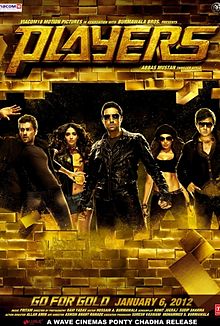
With source material as rich as not one, but two, versions of The Italian Job to draw from, Players should be a slam dunk. Wisely, filmmaking duo Abbas-Mustan take the best aspects from their inspiration and add enough new touches to make it an enjoyable Indian action flick.

My biggest fear before seeing Players was that it wouldn’t be able to hold interest for 2 hours and 47 minutes. But Players is about as well-paced as a nearly three-hour-long movie can be, hitting plot points at the right times so as not to let the action drag.

Abhishek Bachchan anchors the film as Charlie Masceranas, a career thief. He learns from a dying friend about the Russian government’s plans to transfer a large amount of gold bars to Romania. With the help of his imprisoned mentor, Victor (Vinod Khanna), Charlie assembles a team of experts to execute a daring heist.

The team includes Charlie’s sometimes girlfriend, Riya (Bipasha Basu), master of disguise Sunny (Omi Vaidya), explosives expert Bilal (Sikander Kher), illusionist Ronnie (Bobby Deol) and a hacker named Spider (Neil Nitin Mukesh).

So as not to appear to condone thievery, the filmmakers give the crew corny motivations for stealing the gold. Charlie wants to fulfill Victor’s dream of opening India’s largest orphanage. Ronnie, a former magician, wants to build a fully automated house for his daughter, who was accidentally paralyzed during one of his tricks.

Ronnie gets some unintentionally hilarious lines when he explains the end of his stage career: “Magic doesn’t do anything. It only ruins lives.”

Thankfully, Sunny, Bilal, Spider and Riya are just in it for the money. When the plan goes awry, Victor’s daughter, Naina (Sonam Kapoor), comes to Charlie’s aid.

There are some nice interactions between the team members. Sunny and Bilal are funny sparring partners, and Naina’s crush on Charlie creates tension between her and Riya. Charlie is the anchor, but this really is an ensemble film.

Besides the star cast, the movie’s main attractions are its action sequences. The gold-theft scene is tense, and the car chases are pretty good. Strange editing and artificially sped-up shots keep the fight scenes from looking their best, but interesting locales like Russia and New Zealand elevate the whole experience.

A tendency toward corniness pervades Players, to its detriment. It keeps the film from achieving the snappy sophistication of the films that inspired it. In addition to Charlie’s and Ronnie’s Robin Hood motivations, the score heavy-handedly tries to provoke emotions.

The most pandering element in Players is the needless inclusion of comic actor Johnny Lever, a regular feature in Abbas-Mustan films. I don’t find Lever funny, or more accurately, I don’t find the outrageous characters he always plays funny. That directors feel the need to pair his appearances with wacky sound effects just makes things worse. Any spell the movie could hope to cast is broken when Lever appears onscreen.

Another element that can’t be overlooked is how pointedly the movie targets a male audience. Basu and Kapoor both have a couple of forgettable dance numbers requiring to them to gyrate in skimpy dresses. Another female character is viewed through frosted glass as she showers. Almost every Anglo woman in the movie is kitted out in hot pants.

Yet the male stars aren’t required to doff their clothes, apart from a brief scene featuring Mukesh in a bubble bath. Bachchan and Deol are regular romantic leads, and Kher is clearly fit. Why not work in a shirtless shot of one of them, in the name of gender equality?

The thread of sexism isn’t limited to who’s asked to expose the most skin. Naina and Riya are both asked to play the role of seductress to aid the team, which features five men (six, including Victor) and only two women. Language denigrating women goes largely unchallenged by the male heroes.

That said, Players works as an action film. It hits the right notes often enough to sustain excitement for almost three hours, which is the primary objective of any action movie.

Links

Opening January 6: Players

2012 kicks off in star-studded style when the Bollywood action film Players hits theaters on January 6. The remake of The Italian Job (complete with Mini Coopers) stars Abhishek Bachchan, Bipasha Basu, Sonam Kapoor, Bobby Deol and Neil Nitin Mukesh.

Players opens in the Chicago area on Friday at the Big Cinemas Golf Glen 5 in Niles, AMC South Barrington 30 in South Barrington and Regal Cantera Stadium 17 in Warrenville. The movie has a lengthy runtime of 2 hrs. 47 min.

Given how well Don 2 has performed during its first two weeks in theaters, it’s no surprise that the 3D heist film carries over for a third week at all of the above theaters. Its total U.S. haul stands at $3,288,692.

Other Indian movies showing at the Golf Glen 5 this weekend include Beautiful (Malayalam), Rajanna (Telugu) and Rajapattai (Tamil).

Movie Review: Mausam (2011)

1 Star (out of 4)

Buy the DVD at Amazon
Buy the soundtrack at Amazon

In the film industry, a “logline” is a single sentence that summarizes a movie’s plot. It’s an effective way to pique an audience’s interest or pitch a story to investors. Take Die Hard, for example: A cop’s attempt to reconcile with his ex-wife is derailed when her office building is taken over by terrorists.

Loglines aren’t unique to Hollywood; many great Indian movies can be succinctly summarized as well. Chak De India: The Indian Women’s Field Hockey team must overcome their own internal struggles before they can take on the rest of the world.

I’ve tried to craft a logline for Mausam, and I can’t do it. I don’t know what Mausam is about. Okay, I obviously know that it’s about two young people whose fondness for each other spans decades. So what?

In my example loglines for Die Hard and Chak De India, the conflicts that fuel the plots of both films are contained within the sentences. John McClane is at odds with both his ex-wife and the terrorists. The women’s hockey team fights internal and external battles.

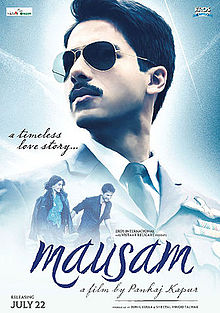
Mausam‘s biggest problem is that it has no conflict. There’s no reason why the lead characters, Harry (Shahid Kapoor) and Aayat (Sonam Kapoor), can’t be together. Their parents don’t object, they’re not engaged to other people, they’re not driven apart by war or culture. Rather, their budding romance is stymied by minor obstacles and a lack of communication.

Harry and Aayat begin falling for one another in Harry’s village in Punjab, where Aayat has moved to escape violent riots in Kashmir. Then Aayat leaves in the middle of the night, without so much as leaving a note for Harry.

Seven years later (in 1999), Aayat and Harry meet again in Scotland. Actually, she spots him first but doesn’t say anything. She waits for him to notice her among all the women in Edinburgh, even though he has no reason to suspect she’d be there.

Her explanation for why she fled so suddenly years earlier? Her dad phoned and asked her to join him in Mumbai. No emergency, and she wasn’t in danger, she just moved house in the matter of a few hours on a moment’s notice.

The couple appear to be on their way to marriage when, this time, Harry is abruptly called away without time to contact Aayat.

Aayat’s excuse for not contacting Harry is difficult to believe, but Harry has no excuse at all. He has Aayat’s cell phone number, her home phone number and her home address. Rather than call Aayat to tell her why he had to leave, he phones his sister in Switzerland and tells her to go to Scotland (without calling first) and meet Aayat in person to explain what happened. Of course, Aayat has herself moved to parts unknown by then.

Harry and Aayat meet several times in subsequent years before they finally commit to a future together during a preposterous action-packed climax. The finale is so stupid, I laughed out loud.

What makes the silliness of actor Pankaj Kapur’s directorial debut such a shame is that Mausam is a great-looking movie. Harry’s hometown is a charming village out of time. There are a number of breathtaking set pieces, as when Harry races on his bicycle to catch Aayat’s departing train. Closeups of Sonam Kapoor — who’s plenty cute on her own — make her look angelic.

Kapur might yet have great success as a director, so long as someone else writes the screenplay.

Another problem that will only affect international audiences is that Mausam‘s English subtitles are translated too literally, something that doesn’t work given the different sentence structures of Hindi and English. Consequently, the jokes aren’t funny, and one must spend so much mental energy reconstructing the words into meaningful sentences that it distracts from the action on screen.

Overall, Mausam proves that style doesn’t trump substance. As gorgeous as it looks, Mausam is too boring and silly to warrant the nearly three hours of attention it requires.

Links

Opening September 23: Mausam

After being delayed for a week, Mausam makes its debut in Chicago area theaters on September 23, 2011. The romantic political drama stars Shahid Kapoor and Sonam Kapoor.

Mausam opens on Friday at the Big Cinemas Golf Glen 5 in Niles, AMC South Barrington 30 in South Barrington and Regal Cantera Stadium 17 in Warrenville. Click here for a national theater listing. It has a listed runtime of 2 hrs. 35 min.

The great romantic comedy Mere Brother Ki Dulhan enters its third week at all three of the above theaters. Bodyguard gets a fourth week at the South Barrington 30.

Note that the Indian-Canadian co-production Breakaway — opening this weekend in India under the title Speedy Singhs — releases internationally on September 30.

Other Indian movies showing at the Golf Glen 5 this weekend include Dookudu (Telugu) and Pranayam (Malayalam).

Movie Review: Thank You (2011)

1.5 Stars (out of 4)

Buy or rent the movie at iTunes
Buy the DVD at Amazon
Buy the soundtrack at Amazon

The more I think about Thank You, the more confused I become. The first two-thirds of the comedy are enjoyable enough, but a serious and preachy third act unravels the entire story that precedes it.

Thank You centers on the womanizing exploits of Raj (Bobby Deol), Vikram (Irrfan Khan) and Yogi (Suniel Shetty). Yogi’s already been caught cheating by his wife, Maya (Celina Jaitley). Suspicious of the other louts’ extramarital activities, Maya introduces Vikram’s wife, Shivani (Rimi Sen), and Raj’s wife, Sanjana (Sonam Kapoor), to her “best friend”: a private eye named Kishan (Akshay Kumar).

Kishan develops a crush on cute, trusting Sanjana and aims to expose her husband for the cheater he is. Raj and his buddies aren’t able to continue their deception for long, and all their secrets are revealed. Maya and Shivani are prepared to move on with their lives, but Sanjana isn’t. She wants Raj back.

Here’s where things get confusing, in retrospect. Kishan agrees to help Sanjana reunite with Raj. His plan is to make Raj jealous by pretending to be Sanjana’s new boyfriend. Presumably, Kishan’s real intention is to show Sanjana how much better he is than Raj and win her for himself.

Without giving anything away, the third act seems to indicate that a potential romance between Kishan and Sanjana was never really an option (or something that either of them even desired). The tension in the second act, at the time, appears to be whether Sanjana will pick Raj or Kishan. Without that tension, the whole second act is, in retrospect, just a big waste of time.

Perhaps sensing the shoddy construction of his parable, writer-director Anees Bazmee has Kishan explain the moral of the story with a condescending speech in the final scene. But the message as delivered by Kishan runs counter to the one that the movie had conveyed to that point. I liked the story that Bazmee actually told better than the one he apparently thought he was telling.

The real shame of Thank You‘s narrative collapse is that most of the movie is pretty funny. The set pieces are good, and the jokes translate well cross-culturally.

Particularly deserving of praise are Shetty and Sen for their performances as Yogi and Shivani, respectively. Yogi, having been previously outed as a cheater, revels in watching his two buddies get caught for the same crime. Shivani is the most put-upon wife and therefore the most eager to take revenge on her husband. Shetty and Sen take full advantage of their opportunities to ham it up.

The weakest member of the cast is Kapoor. Still a relatively new actress, everything about her performance — from her physical presence to her voice — lacks gravity. She’s pretty and stylish, but that’s not enough to make her a lead that an audience cares about.

Links

Opening April 8: Thank You

Another new Hindi movie opens this weekend in the Chicago area. Thank You stars Akshay Kumar as a detective trailing three husbands whose wives have caught on to their womanizing ways. Kumar’s character loses his professional objectivity when he falls for one of the wives, played by Sonam Kapoor.

Thank You opens on Friday, April 8, 2011, at the AMC Loews Pipers Alley 4 in Chicago, Big Cinemas Golf Glen 5 in Niles, AMC South Barrington 30 in South Barrington and Regal Cantera Stadium 30 in Warrenville. It has a listed runtime of 2 hrs. 35 min.

The flashy murder mystery Game gets a second week at the Golf Glen 5, South Barrington 30 and Cantera 30.

Other Indian movies showing in the area this weekend include Mappillai (Tamil) and Shakti (Telugu) at the Golf Glen 5.

Movie Review: Aisha (2010)

2.5 Stars (out of 4)

Buy the DVD at Amazon
Buy the soundtrack at Amazon

Jane Austen’s novel, Emma, has inspired numerous adaptations in the nearly 200 years since it was first published. The latest onscreen version, Aisha, is watchable, but its heroine misses the mark.

In this modern Indian update, directed by Rajshree Ojha, Emma is renamed Aisha (Sonam Kapoor): a wealthy girl from Delhi who fancies herself an expert matchmaker. Her intrusiveness and inability to read people winds up complicating the lives of all around her.

Of particular interest to Aisha is Shefali (Amrita Puri), a small-town girl who’s looking for a husband. Shefali presents a convenient means for Aisha to rid herself of her own dorky suitor, Randhir (Cyrus Sahukar). She sets about trying to force the two to fall in love, with disastrous results.

Debutant actress Puri does a lovely job as Shefali. She’s desperate not to disappoint Aisha, yet incapable of becoming the society girl she’s expected to be. The earnestness and excitability Puri brings to the role is spot on.

American filmgoers will find Aisha very accessible. The characters’ addictions to trendy fashions and designer labels is universal among young people with money to burn. The story is structured like many Hollywood movies (though it’s occasionally bogged down by the song-and-dance montages unique to Bollywood). A familiar story helps as well.

Emma Woodhouse is an enduring character because of her complexities: supreme self-assurance paired with a lack of real world experience, a compassionate nature mixed with uncontrollable nosiness. Like Emma herself, Sonam Kapoor lacks the experience to make Aisha an appealing leading lady. Kapoor plays Aisha as woefully immature, to the point that she seems like the lone adolescent in a world full of adults.

Kapoor delivers her lines with whiny condescension. When Aisha finally apologizes for her mistakes, it seems as if she’s doing so just so that people won’t be mad at her, and not because she’s gained any insight her own behavior. She responds to a declaration of love with a shrill and insincere, “Really?”

In the movie Clueless — another modern remake of Emma, from 1995 — the main character narrates the movie. It allows the audience to hear her thoughts, testifying to her change of character. A similar technique would’ve been useful in Aisha.

Despite a lackluster heroine, Aisha has a great supporting cast. In addition to Puri’s solid turn as Shefali, Abhay Deol reaffirms his rising star status with a charming and authentic performance as Arjun, Aisha’s long-time neighbor and friend (the George Knightly role in Emma).

The character who undergoes the most emotional growth throughout the story is Aisha’s best friend, Pinky (Ira Dubey). Pinky begins the movie as Aisha’s cynical sidekick, snobbishly looking down upon everyone but Aisha. There’s a moment when she realizes that she’s been too hard on Randhir, and it changes her outlook on life. Too bad Aisha didn’t experience such growth herself.

Links

Opening August 6: Aisha

The only new Hindi film releasing in theaters this weekend is Aisha, starring Sonam Kapoor and Abhay Deol. Aisha is a contemporary version of Jane Austen’s Emma — similar to the 1995 Hollywood film Clueless — set in high society Delhi.

Aisha opens on Friday, August 6, 2010 in the Chicago area at the Big Cinemas Golf Glen 5 in Niles, AMC South Barrington 30 in South Barrington and Regal Cantera Stadium 30 in Warrenville. The movie has a listed runtime of 2 hrs. 6 min.

The comedy Tere Bin Laden finally makes its Chicago area debut after releasing internationally on July 16. It also opens on Friday at the Golf Glen 5.

Gangster flick Once Upon a Time in Mumbaai continues for a second week at the Golf Glen 5 and AMC South Barrington 30.

Other Indian movies showing around Chicago this weekend include Don Seenu (Telugu), Maryada Ramana (Telugu) and Oru Naal Varum (Malayalam) at the Golf Glen 5.