Tag Archives: Zero Stars

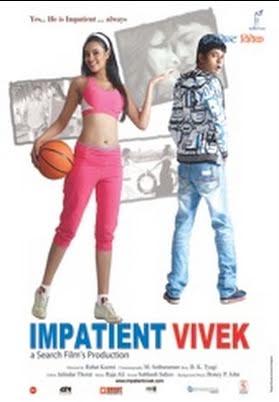
Movie Review: Impatient Vivek (2011)

Zero Stars (out of 4)

Buy the DVD at Amazon
Buy the soundtrack at Amazon

I’ve wracked my brain for something nice to say about Impatient Vivek. The best I’ve got is that writer-director Rahat Kazmi must be a talented pitchman, since he convinced someone to produce such a stupid movie. Impatient Vivek is so laughably bad that it nearly achieves so-bad-it’s-good status, thanks in large part to the most poorly translated English subtitles I’ve ever seen.

Impatient Vivek‘s problem stems from the fact that it has no plot, or at least not a plot in the traditional cinematic sense. It jumps right into the action without introducing the characters. Thus, it’s just confusing as the film begins with the titular Vivek (Vivek Sudershan) stealing money from his parents to take his nerd buddies on vacation to Goa, where they break into song.

What exactly is the audience supposed to feel at this point? All we know about the main character is that he’s a thief. Are we supposed to be happy for him?

Vivek falls for a girl named Shruti (Sayali Bhagat), who has no interest in him, likely because he attempts to woo her by communicating via a hand puppet. Two years pass, they meet again and she’s still not interested (probably because of his persistent interest in amateur puppetry).

In fact, Shruti’s engaged to some American guy. Her estranged older half-brother, Anu (Rannaoq Ahuja), returns to India from Canada to celebrate.

Suddenly, Anu becomes the focal point of the story. He tries to romance one of Shruti’s friends, and there’s a subplot involving Anu’s jealous half-brother. Shruti doesn’t reappear until Vivek kidnaps her on her wedding day, in yet another anti-heroic blunder.

When Shruti falls for Vivek — despite his being an immature criminal jackass — it just makes sense. It’s the natural conclusion to a movie in which a bunch of unlikeable characters behave in ways contrary to the ways real people behave.

The story isn’t the only problem in Impatient Vivek. The acting is uniformly terrible; the feeble attempts by the lead actors to muster tears are hilarious. Dance numbers are lame, sets look cheap and the editing is awkward.

But the highlights of Impatient Vivek are its nonsensical subtitles. The dialogue transcriber is clearly not fluent in English — and maybe not Hindi, either — as is evidenced by innumerable grammatical errors, misspellings and a general failure to convey meaning. For example:

“Anu become hero here to came from foreign.”

Huh? Given the amount of translation needed from broken English into actual English, I might’ve had an easier time figuring out what was being said if I’d ignored the subtitles and just used my own Hindi-English dictionary, instead.

Links

Movie Review: Being Cyrus (2005)

Zero Stars (out of 4)

Buy the DVD at Amazon

Rarely do I wish that an Indian film was longer, given that the majority are nearly two-and-a-half hours long. But Being Cyrus, which runs only 89 minutes, seems far too short to give its damaged characters time to develop. Or maybe the characters and story were poorly conceived to begin with, and no amount of time would’ve allowed them to develop.

The presumptive lead character of the film is the titular Cyrus (Saif Ali Khan), an adult orphan who answers an ad for an artist’s assistant. The artist is Dinshaw Sethna (Naseeruddin Shah), a recluse so stoned that he doesn’t recall placing the ad. Dinshaw’s horny, attention-starved wife, Katy (Dimple Kapadia), insists that Cyrus move in with them and be their errand boy.

Early on, the film relies heavily on Cyrus’ narration (in English) to explain the complex relationships within the Sethna family. The withered patriarch, Fardounjee (Honey Chhaya), lives in squalor under the care of Dinshaw’s cruel and cheap industrialist brother, Farrokh (Boman Irani), and Farrokh’s meek young wife, Tina (Simone Singh). Dinshaw, again, is too stoned to care what’s happening to his dad.

Katy gives Cyrus a stack of cash and sends him to the city to bring treats to poor old Fardounjee. This angers Farrokh. However, Farrokh and Katy are carrying on a romantic affair over the phone. I’m not sure why she’d want to intentionally piss off her beloved, but there’s an awful lot about Being Cyrus that doesn’t make sense.

Following the introduction of an annoying police inspector played by Manoj Pahwa, Cyrus goes on a killing spree before the film culminates in an unforeseeable twist ending. (Damn you, The Usual Suspects, for spawning a generation of inferior twist endings!) There’s no possible way events could’ve been managed to work out the way they did, despite the claims of Cyrus’ accomplice to have controlled everything. There’s not even an attempt at retroactive continuity.

For a twist ending to work, there need to be clues to the ending sprinkled throughout the story. Being Cyrus doesn’t have any of those clues, nor even a narrative thread to speak of. Rather, the film jumps from scene to scene randomly. Most of the notes I wrote while watching the DVD consist of: “How did we get here?” and “Why is this happening?”.

Things would be different if Being Cyrus was a sophisticated or complex movie, but it’s not. It’s the messy first effort of director-screenwriter Homi Adajania, whose debut is light on context and character motivation.

Watching the loathsome, anemic characters of Being Cyrus bumble through the disjointed plot is a grim, unpleasant experience I wouldn’t wish upon anyone, no matter how brief the punishment may be.

Links

Movie Review: Turning 30 (2011)

Zero Stars (out of 4)

Buy the DVD at Amazon

Writer-director Alankrita Shrivastava wanted her debut film Turning 30 to portray young, urban Indian women in a fun yet realistic way. I hope Shrivastava’s portrayal is inaccurate, because the female characters in Turning 30 are pitiable.

Days before her 30th birthday, Naina (Gul Panag) seems to have an ideal life: a house, a good job at an ad agency and a boyfriend, Rishabh (Sid Makkar), who’s ready to propose. When Naina’s ideas are stolen at work and Rishabh abruptly breaks up with her, Naina falls apart.

This is a fine set up for a story, but a set up is all it should be. Instead, Naina’s despair over her unsettled life is the story of Turning 30. Any time she sees or thinks about Rishabh, Naina gets a forlorn look in her eye and cries in the rain. She begs him to take her back, accosts his parents and belabors anyone who will listen about how lost she is without Rishabh and how she doesn’t know what to do with her life. It’s pathetic.

That’s not to say Naina’s reaction is unrealistic. It’s just that being sad isn’t the interesting part of getting dumped: it’s how a person gets over it. Naina doesn’t make any attempt to get over Rishabh or take charge of her career until the last fifteen minutes of this two-hour movie. Her plight devolves from dull to excruciating.

After Naina is dumped, she quickly rebounds into a sexual relationship with her ex-boyfriend, Jai (Purab Kohli), a successful artist who’s ready to settle down. Despite knowing that Jai’s in love with her, Naina sleeps with him repeatedly, but always with the caveat that she’s not over Rishabh yet — as though her honesty absolves her from leading him on.

This level of self-absorption would almost be forgivable if Naina were a nice person, but she’s not. In addition to her cruel treatment of Jai, she’s short-tempered with her mother, her maid, and her coworkers. When her friend, Malini (Tillotama Shome), breaks down in tears and discloses that she’s a lesbian, Naina looks at her as though she’s a freak and makes no attempt to comfort her.

As uninspiring a heroine as Naina is, Shrivastava is almost misogynistic in the way she writes Naina’s other best pal, Ruksana (Jeneva Talwar). Ruksana discovers her husband is cheating on her at the same time she learns that she’s pregnant. The pregnancy temporarily puts a halt to hubby’s wandering, but he strays again as soon as the baby is born. Ruksana tells Naina and Malini that her husband’s cheating no longer bothers her, now that she has a baby to love her.

Excuse me?

What’s worse is that Naina and Malini don’t even challenge Ruksana. No “you deserve better than that” pep talk. Just a shrug and an “as long as you’re happy” that seems to indicate that this is to be expected.

So, in a nutshell, Shrivastava’s realistic portrayal of the life of a modern Indian woman amounts to this: Get educated. Get a job. Land a husband before you get too old/before the unrelenting parental pressure to marry becomes unbearable/before he finds somebody with more money. Get knocked up and quit your job. Hubby will (and, judging by the women in this movie, maybe should) ditch you for a younger, hotter woman. But, hey, at least you’ve got a baby.

Why bother?

Links

Movie Review: Pankh (2010)

0 Stars (out of 4)

Buy the DVD at Amazon
Buy the soundtrack at Amazon

Normally, I don’t write reviews of movies I don’t finish, but I’m making an exception for Pankh. I had to stop the DVD after 30 minutes, because director Sudipto Chattopadhyay’s ceaselessly spinning and rotating camera gave me motion sickness.

Pankh is Chattopadhyay’s first directorial effort, under the banner White Feather Arthouse Films. Chattopadhyay seems to think making an “art” movie is little more than a license to disregard the rules of competent filmmaking and get away with stuff the censor board would normally disallow.

The movie’s story is fractured into flashbacks and dream sequences that interrupt the flow of the action set in the present. The story revolves around a young man named Jerry (Maradona Rebello). When he was a child, Jerry’s mother, Mary (Lilette Dubey), tried to foist her own dreams of screen stardom onto her son, making him appear in movies dressed as a girl under the stage name “Baby Kusum.”

As an adult, Jerry predictably struggles with his sexual and gender identities. He seeks refuge in a fantasy world where he meets with a glamorous screen diva, played by Bipasha Basu.

The dream sequences are the most physically unsettling parts of the movie. In one, the camera, trained on Basu, rotates on a pivot while simultaneously tilting from side-to-side, like a rocking boat. I got dizzy watching it and turned the DVD off.

But stupid camera techniques are used in the present day scenes as well. At one point, as Jerry talks to an old acquaintance, the camera is turned 90 degrees to the left. Jerry’s face is visible in the top right corner of the screen, while his body is off camera. All that’s visible of his friend is the top of his head in the bottom left corner of the screen.

I could forgive the nauseating camera work if it had a point. In The Blair Witch Project, the shaky handheld camera shots were supposed to make it feel like a documentary. Chattopadhyay uses the camera the way he does in Pankh just because he can.

Chattopadhyay tries to make Pankh edgier with somewhat scandalous content. Jerry smokes and does drugs. Characters swear profusely in English, and their Hindi curse words are bleeped. In one fantasy scene, Jerry is depicted as Jesus carrying a cross. Jerry and another male character are shown masturbating.

As a filmmaker, Chattopadhyay is like the 13-year-old boy left home alone, trying to get away with doing as many “adult” things as possible before his parents return. There’s no maturity to his attempts at edginess. I can only imagine how painful — physically and emotionally — it would’ve been to endure the final 70 minutes of Pankh.

Links

Movie Review: London Dreams (2009)

londondreamsZero Stars (out of 4)

Buy the DVD at Amazon
Buy the soundtrack at Amazon

2008’s Rock On!! is a great Hindi film about a rock band and the tensions that develop between band members. Though London Dreams is also about problems within a rock band, it’s every bit as bad as Rock On!! is good: shallow and lacking an understanding of human emotions.

London Dreams is about Arjun, a Punjabi boy who dreams of becoming a great musician. However, his family hates music, blaming that particular form of entertainment for the death of Arjun’s grandfather.

When Arjun’s father dies — an event Arjun interprets as divine confirmation of his musical destiny — the boy moves to London with his uncle. Arjun runs away in the airport and buys his way into a music school with pocket change. (What? It could happen.)

As an adult, Arjun (Ajay Devgan) is so singularly focused on his goal of headlining Wembley Stadium that he won’t let anything distract him, going to far as to whip himself with a belt to suppress his sexual urges for his backup dancer, Priya (Asin Thottumkal). Arjun’s band, London Dreams, takes England by storm, even though their music is mediocre.

Arjun’s childhood friend, Mannu (Salman Khan), leaves his life of philandering in Punjab to live with his pal in London. For kicks, Arjun invites Mannu to perform on stage with London Dreams.

There’s a freak confetti accident during the performance, and Arjun gestures to Mannu to take over as frontman. Turns out, slacker Mannu is a more charismatic singer than Arjun. Mannu gets all of the accolades, as well as Priya’s affections, and Arjun sets about trying to destroy his best friend and take back the spotlight for himself.

Overall, London Dreams is a sloppy movie. The same footage is used for concerts that are supposed to take place separately in London, Paris and Rome; try to spot the girl in the blue basketball jersey in the crowd at all three concerts.

Worse, the band members barely even pretend to play their instruments. The old, mohawked drummer never comes within an inch of the cymbals he’s supposed to be playing. Heck, he’s not even an official member of the band, which consists of two singers, two guitarists and a backup dancer. It’s impossible for them to produce the music that makes up the movie’s soundtrack; it should have also been impossible for Mannu to auto-tune his own voice without the aid of a microphone and computer.

Trumping all of the movie’s other problems, the lead characters in London Dreams are deplorable. Arjun is a sociopath, and Mannu’s alternately a promiscuous lout and a simpleton. Their relationship with each other doesn’t develop, and Arjun never faces any consequences for being a terrible person.

Skip London Dreams and rent Rock On!! If nothing else, the music’s better.

Movie Review: Do Knot Disturb (2009)

doknotdisturbZero Stars (out of 4)

Buy the DVD at Amazon
Buy the soundtrack at Amazon

With the world in the middle of an economic crisis, there is one easy way consumers can save money: don’t waste it on Do Knot Disturb.

The movie stars Govinda as Raj, a businessman trying to hide an affair from his suspicious wife, Kiran, played by Sushmita Sen. Kiran owns the company Raj works for, so if he were to get caught with his mistress, Dolly (Lara Dutta), he’d lose his high-paying job as well as his marriage.

Raj hires a waiter to pose as Dolly’s boyfriend in order to trick a private investigator hired by Kiran. In return, the waiter, Govardan (Ritesh Deshmukh), gets an upgraded private hospital room for his ailing mother, as well as a chance to play house with the lovely Dolly.

Dolly also has a jealous ex-husband, played by Sohail Khan, who shows up to slap people. Slapping is the foundation to many of Do Knot Disturb‘s attempts at humor.

The movie’s other attempts at comedy center around men making lewd gestures at women. When the male characters aren’t slapping each other, they’re trying to grope or hump the nearest female character. It’s best to leave the kids at home for this movie, unless you’re looking for a way to broach the topic of where babies come from.

Based on the way jokes and dialog are constructed, I assume that the makers of Do Knot Disturb think that the only people who would see their movie are idiots. That would explain the following exchange between Raj and Kiran:

Kiran: Who is he?
Raj: Who is he?
Kiran: Who is he?
Raj: Who is he?
Kiran: Who is he?
Raj: Who is he?

Many other jokes rely on the comedic theory that things are funnier in threes. Repetition of the same bad jokes doesn’t automatically make them funnier. In this case, it just serves to make the movie feel a lot longer than 2 hrs. 6 min.

Early into the film, I had hopes that the movie would be, if not funny, at least not annoying. It didn’t take long for me to lose any optimism I had. After one scene in which Raj and Govardan spend ten minutes shrieking at each other in high-pitched voices for no reason whatsoever, I actually left the theater.

I convinced myself to go back in and watch the end of the movie, hoping that there would at least be some explanation for why the title contains a deliberate misspelling. There wasn’t. The filmmakers just thought it would be clever to replace “not” with “knot.” But guess what.

It’s not.

Movie Review: Kal Kissne Dekha (2009)

Kal Kissne DekhaZero Stars (out of 4)

Buy the DVD at Amazon
Buy the soundtrack at Amazon

Kal Kissne Dekha is a movie about a young man with a special power: the power to bore an audience to tears by relying on Bollywood cliches.

The young man in question is Nihul (Jackky Bhagnani), a country boy who can see the future. He leaves his lonely, heartbroken mother and heads to a university in the city to become a scientist.

As is the case in many Hindi films these days, Nihul is supposedly the most awesome guy ever. He doesn’t do anything to warrant this status; it’s simply that he’s the protagonist and the plot demands it.

However, there’s a group of cool kids at college who don’t like the flashy newcomer. The mean guy and the snobby girl pick on Nihul until his psychic ability allows him to save their lives. Only then do they realize how fabulous Nihul really is.

In between motorcycle chases, fight scenes and dance numbers, Nihul falls in love with the snobby girl, Nisha (Vaishali Desai). Not for any good reason, mind you, but because the plot demands it. Then the requisite gangsters, gay stereotypes, terrorists and incompetent policemen show up, just to make sure no Bollywood cliche is left behind. It’s as though the film was written by checking items off of a list.

Kal Kissne Dekha is writer-director Vivek Sharma’s second effort, following last year’s forgettable Bhoothnath. I’d appreciate it if he’d stop making movies, and not try to see if the third time is the charm. Sharma’s storytelling style insults the audience’s intelligence by relying on cliches and stunts in place of even the barest hint of character development. And he shamelessly includes two of the young stars of Slumdog Millionaire in brief cameo appearances in order to capitalize on their fame.

If Sharma insists on writing and directing more movies, he needs to abandon two themes present in both of his efforts to date. First is the notion that the only route to popularity is by using a supernatural ability to save someone. In Bhoothnath, the young protagonist relies on his ghostly pal to pull the school bully out of a well, thereby winning the bully’s friendship. As a moral to a story, it’s a pretty depressing one for those of us without superpowers.

The second bizarre theme is that disaster befalls those who dare move out of their parents’ homes. It’s blatant in Bhoothnath, but it also crops up in Kal Kissne Dekha, as when Nihul tells his mother, “I never should have left home.” It’s a conservative message that doesn’t mesh with the fact that, by moving to the city, Nihul gets to study science, make friends and meet his girlfriend — stuff he couldn’t have done in his small village.

Movie Review: Golmaal Returns (2008)

Zero Stars (out of 4)

Buy or rent the movie at iTunes
Buy the DVD at Amazon
Buy the soundtrack at Amazon

I can’t think of a single reason to recommend this slapstick comedy. Every moment is annoying, from the persistent sound effects (such as flatulence followed by a slide whistle) to the character with a speech impediment who can speak only in vowels, and at a pitch that would make dogs howl. Even veteran actors like Ajay Devgan and Kareena Kapoor overact so outrageously that it’s impossible not to despise every character in Golmaal Returns.

This review originally appeared in The Naperville Sun on November 6, 2008

Movie Review: Love Story 2050 (2008)

Zero Stars (out of 4)

Buy the DVD at Amazon
Buy the soundtrack at Amazon

In writer-director Harry Baweja’s vision of the future, people wear parachute pants, dance the Moonwalk, and play with Teddy Ruxpin dolls. The future as portrayed in Love Story 2050 looks a lot like America in the 1980s, only with hovercars. The characters don’t even travel to 2050 until halfway through the film, after an interminable present-day setup in which an obnoxious lout woos a young woman too bewitched by his luxurious hair to notice that he’s an idiot.

No Rating (violence, language); 179 minutes

This review originally appeared in The Naperville Sun on July 10, 2008

Movie Review: Sarkar Raj (2008)

Zero Stars (out of 4)

Buy the DVD at Amazon
Buy the soundtrack at Amazon

The considerable acting talents of Bollywood’s royal family, the Bachchans (Abhishek, wife Aishwarya Rai, and father Amitabh), are wasted in Sarkar Raj, a sequel to the 2005 gangster flick Sarkar. Absent a compelling script, director Ram Gopal Varma has to alert the audience when anything of even minor significance happens, using absurdly dramatic music and close-up shots of the actors’ most mundane reactions. Varma’s homage to The Godfather is as subtle as a horse head in your bed.

This review originally appeared in The Naperville Sun on June 12, 2008