Tag Archives: Movie Review

Movie Review: I Am Singh (2011)

0.5 Stars (out of 4)

Hate crimes committed against Sikhs, Muslims and others deemed sufficiently “Arab-looking” in the wake of 9/11 are some of America’s greatest embarrassments. Yet I’m not sure I Am Singh is the movie the victims of those attacks would want to represent their side of the story.

I Am Singh is a boring, poorly acted sequence of lectures on Sikh history and American moral failings that insults the intelligence of those who watch it.

The movie is held together by a thin excuse for a plot, cobbled together from real-life examples of crimes committed against American Sikhs. The presumptive lead of the film is Ranvir (Gulzar Chahal), an Indian Sikh who flies to America after his family is attacked by a gang of skinheads in Los Angeles. One of his brothers is killed, the other falsely imprisoned, and their father seriously injured.

I say that Ranvir is the presumptive lead because he disappears entirely during the climax and is frequently benched in favor of subplots. Ranvir’s biggest competition for screentime comes from Fateh Singh (Puneet Issar, the film’s writer, director and producer), a member of the “U.S. Police Force” fired for wearing a turban.

Issar doesn’t seem to have enough confidence in his story’s ability to convey his moral message. He has characters deliver all of their important dialog looking straight into the camera, just so there’s no confusion about who the message is really directed at. The effect is comical.

It’s almost as a comical as the sheer volume of closeup shots of actors faces. I didn’t count, but it’s probably close to one hundred. Frequently, the camera zooms into closeup, making the movie feel like a Mexican soap opera. I couldn’t help but think of this:

The acting is horrible across-the-board, but kudos to the non-Indian actors for being especially bad. The two blonde human rights lawyers deliver their lines woodenly, while the skinhead leader with the eye patch that won’t stay in place insists on shouting at subordinates standing a few feet away.

The audio dubbing is frequently out of sync. For some reason, many of the white American actors have Australian or British accents despite the action taking place in L.A.

Laughably poor execution aside, I Am Singh runs into its biggest problems when it veers into hypocrisy. America is alternately characterized as beacon of morality that simply lost its way and as an irredeemable nation of hateful morons. Such generalization is exactly what the movie is trying to condemn.

Overall, I Am Singh represents a huge missed opportunity to introduce a wider audience to Sikhism.

Links

Movie Review: Desi Boyz (2011)

2 Stars (out of 4)

Buy the DVD at Amazon
Buy the soundtrack at Amazon

Desi Boyz borrows liberally from the plots of movies like The Full Monty and Loverboy while failing to really understand either. Both of the Hollywood comedies are about ordinary men pressured into selling their bodies (in one way or another). In the process, they learn that romance is about more than looks, and that men and women both have insecurities about sex.

Debutant writer-director Rohit Dhawan misses the point of the movies he’s aping, and instead casts two of the hunkiest actors in India — John Abraham and Akshay Kumar — to play a pair of down-on-their-luck Londoners forced to dance at bachelorette parties for dozens of sexy, scantily clad women.

Abraham plays Nick, a financier, and Kumar plays Jerry, a mall security guard and (gasp!) college dropout. Jerry is  responsible for his young nephew, Veer, following the deaths of the boy’s parents. Nick is planning a dream wedding for his girlfriend, Radhika (Deepika Padukone).

Their plans fall apart when they are both laid off. In order to keep child services at bay, Jerry signs on with an escort service called Desi Boyz. Nick reluctantly agrees to help Jerry for Veer’s sake. While their new careers forestall financial ruin, child services take Veer when they learn the source of Jerry’s income. Radhika spots the guys performing at a bachelorette party and dumps Nick.

While film’s promos focus on Abraham and Kumar as strippers, that plotline is dropped after the first half of the movie, never to be resurrected. The second half falls into the doldrums as Jerry goes back to college and Nick tries to win Radhika back by living in a trailer on her front lawn and smoking pot with her dad, played by the always delightful Anupam Kher.

All of this is supposed to enforce the tidy moral messages that dignity shouldn’t be sacrificed for short-term gains and that one can only succeed with a college degree. So why does Jerry, immediately upon getting his degree, blackmail someone into giving him a job with false accusations of sexual assault? What kind of moral message does that send?

There’s similarly inconsistent character growth in the Nick and Radhika storyline. Nick, the supposed champion of hard work, ultimately wins Radhika back by being a slacker. Radhika is no peach herself, leading on a nerdy suitor played by Omi Vaidya solely to make Nick jealous.

Desi Boyz would’ve been more interesting had Vaidya and Kher played the guys forced to become strippers. Or Nick’s character could’ve been marginalized, shifting the focus onto Jerry as he supports Veer and pays his way through college working as a male escort. (How did broke, jobless Jerry find the money for college anyway? The movie doesn’t explain).

Rohit Dhawan has some potential as a filmmaker if he can keep his stories focused and his characters consistent. I like his debut better than most of the movies I’ve seen by his father, filmmaker David Dhawan.

Links

Movie Review: Chillar Party (2011)

2 Stars (out of 4)

Buy or rent the movie at iTunes
Buy the DVD at Amazon
Buy the soundtrack at Amazon

There are two contradictory messages at work in the family movie Chillar Party. The explicit message directed at kids is that friendship, loyalty and compassion are values worth fighting for. The implicit message conveyed by the grown-up characters is that those values are meaningless in adulthood.

The movie focuses on a group of eight elementary school boys who call themselves Chillar Party. A homeless orphan named Fatka (Irfan Khan) takes up residence in an abandoned car on the grounds of their apartment complex, where he makes money washing the cars of the middle-class apartment-dwellers. Chillar Party sets about terrorizing Fatka, fearing that his canine best friend, Buddy, will defecate on their cricket pitch.

The cruel acts culminate in the boys locking Buddy in a car with the windows rolled up, reducing Fatka to panicky tears. It’s such a tense scene that it’s hard to watch. The boys realize they’ve gone to far and let Fatka and Buddy join Chillar Party.

Their friendship is put to the test when Buddy defends Fatka against rough treatment at the hands of a politician’s aide. This prompts the politician to call for a city-wide eradication of stray dogs, starting with Buddy. Chillar Party bands together to fight for Buddy’s life on behalf of Fatka.

Through a narrow lens, Chillar Party is a pretty good movie for kids. The young actors are competent, and all are cute (as is Buddy the dog). There are some laugh-out-loud funny moments when the kids spout dialog wiser than their years, and the moral themes of self-sufficiency and loyalty are well-presented.

However, the cast is too big to allow any of the kids to develop distinct personalities beyond their nicknames. Throw in the kids’ parents and other apartment residents, and there are a few dozen characters to keep track of. On top of that, the film has a runtime of 135 minutes, way longer than the youthful target audience can be expected to pay attention.

But Chillar Party‘s biggest problem concerns the behavior of the adults in the apartment complex. First is their troubling acceptance of child labor, a practice which the politician eventually points out is illegal. No one bats an eye when the president of the apartment board hires a kid who’s at most ten years old to wash their cars. For the sake of the plot, I’ll let it slide.

Yet none of the parents is willing to make even the slightest compassionate gesture toward Fatka, beyond paying him for services rendered. All of the families have enough money to afford cars and remote-controlled toys for their own kids, yet none of the mothers ever sends her child out with a plate of leftovers for Fatka. No father offers to let the boy sleep on the couch when rain pours into the car he calls home through windows that won’t close.

In fact, when one family notices Fatka shivering feverishly, the father’s response is to turn his own son’s face from Fatka’s suffering and usher the family into their apartment. Fatka spends the night in the car, hungry, sick and alone.

By this point in Chillar Party, Fatka is a friend to all of the boys in the apartment complex. The kids make an effort to help him in the best ways they can think of, given their nascent senses of morality. The fact that the parents are willing to risk the potential, preventable death of their children’s friend — just because he’s not their own kid and, therefore, not their problem — is appalling.

Links

Movie Review: Rockstar (2011)

3 Stars (out of 4)

Buy the DVD at Amazon
Buy the soundtrack at Amazon

The trailer for Rockstar presented the movie as a typical rom-com in which a dork melts an ice queen’s heart before the interval, only to have obstacles to their love thrown in their path for the second half of the movie. Rockstar is less conventional than that. At times, it’s an extended music video, at others a hypnotic tale of passion. It’s not always successful, but director Imtiaz Ali deserves credit for trying something different.

As in Ali’s two previous hits — Jab We Met and Love Aaj KalRockstar features a hero unable to articulate his feelings for his beloved, even if it means losing her to another man. This time the tongue-tied protagonist is Janardhan (Ranbir Kapoor), a dorky college kid with superstar ambitions.

Cafeteria-owner Khatana (Kumud Mishra) tells Janardhan that his life has been too easy, and that all musicians must suffer for their art. Janardhan’s real problem is a lack of charisma and a fondness for unflattering sweater vests, but that’s not much of a movie set-up.

Janardhan humiliates himself in a clumsy effort to woo the most popular girl in school, Heer (Nargis Fakhri), who’s already engaged to a rich guy from Prague. The two become pals, and she gives him the stage name “Jordan.” She also gives him an opportunity to express his feelings for her and perhaps forestall her marriage. He doesn’t take it, and Heer heads to Prague.

To this point — about the first hour of a 2-hour 40-minute movie — the story is laid out rather predictably: the kids have fun in seedy back alleys and amidst beautiful scenery in Kashmir, the setting for Heer’s wedding. The snowy mountain passes and gorgeous costumes are a real highlight.

Things veer from the expected during the film’s second hour. It begins not chronologically, but rather with a reporter investigating Jordan’s early career. It’s two years after Heer’s wedding, and Khatana recounts the emotion collapse that preceded Jordan’s rise to Indian rock stardom. An international music competition brings Jordan to Prague where he and Heer rekindle their interrupted romance, despite her now-married status.

Much of this storyline unfolds through A.R. Rahman’s incredible soundtrack. The second hour of Rockstar is primarily a string of music videos, the lyrics of Jordan’s music (voiced by Mohit Chauhan) providing insight into his emotional growth in way he can’t express in conversation. Thankfully, the lyrics are translated really well, allowing the story to unfold in an intriguing way.

Kapoor and Fakhri are terrific together. Their love scenes are sexy and passionate. Fakhri’s big screen debut is a promising one, as she plays Heer with the right mix of vulnerability and strength.

It’s unfortunate, then, that the movie ends the way that it does. While the movie’s main character is clearly Jordan, the second hour of the film gives equal weight to the choices both he and Heer must make. As the movie shifts into its third and final timeframe, Heer’s choices are taken from her, reducing her from a lead character to a mere catalyst for Jordan’s emotional growth.

That disservice to Heer’s character — along with an awkward bridge between the final shot of the movie and the closing credits, made up of scenes of Jordan and Heer in happier times — left me with mixed feelings about the movie. It’s uneven (and too long, of course), but the solid performances, beautiful scenery and intriguing story-telling mechanism make it worth a trip to the theater.

Links

Movie Review: Ra.One (2011)

3 Stars (out of 4)

Buy the DVD at Amazon
Buy the soundtrack at Amazon

After heavily promoting the most expensive movie in Indian cinematic history, the makers of Ra.One created high expectations for their film. Even if it’s not the instant classic it aspired to be, Ra.One is exactly what it should be: a fun action flick with some great special effects.

The film stars Shahrukh Khan as a nerdy programmer named Shekhar. He lives in London with his wife, Sonia (Kareena Kapoor), and their son, Prateek (Armaan Verma), a preteen fascinated by the dark side. In order to improve his image in his son’s eyes, goody-two-shoes Shekhar creates a video game in which the villain is all but indestructible.

The virtual villain, Ra.One — whose name is a play on Raavan, the demon in the Ramayana — is programmed with an artificial intelligence that takes umbrage at being beaten by young Prateek, who plays under the gamer handle “Lucifer.” Ra.One accesses a prototype technology created by Shekhar’s company that imbues holograms with physical substance, allowing Ra.One to materialize in the real world and hunt Lucifer.

When Prateek figures out what has happened, he realizes his only hope is to make the game’s hero, G.One (a play on the Hindi word for “life”), corporeal as well. G.One looks exactly like Shekhar, only buffer and cooler. Will G.One be able to protect Prateek from the world’s ultimate villain?

$40 million — a monstrous budget for a Hindi movie — pales next to the hundreds of millions spent on Hollywood action films. But director Anubhav Sinha uses his resources wisely and gets great results. A chase through the streets of London is heart-stopping, as is a thrilling showdown between Ra.One and G.One in a junkyard.

It’s only when Sinha relies too much on computer-generated images do the limits of the budget show. G.One fights a gang of thugs with a CGI soccer ball that looks phony and insubstantial.

3-D is deployed in a satisfying way throughout, adding depth to scenes rather than projecting images out into the audience. It enhances the movie’s pleasing aesthetic. An early dream sequence and the final battle are stunning, with a high-contrast style reminiscent of director Tarsem Singh.

The film’s dance numbers are well-executed and full of energy. Khan and Kapoor genuinely look like they enjoy dancing together; they have a nice rapport off the dance floor as well. Shahana Goswami and Tom Wu round out the likeable cast of heroes as Shekhar’s coworkers, Jenny and Akashi.

At times, the movie’s ultimate message — that one should always, as my mom says, “do good and avoid evil” — gets muddled. Prateek isn’t just a moody preteen; he’s also somewhat of a bully, making jokes at the expense of an overweight classmate. I’m not sure he’d be so quick join the good guys if his life weren’t in danger, and Verma’s bland performance didn’t convince me otherwise.

Prateek’s not the only one with a nasty streak. Jokes that depict gays as uncontrollable sex addicts and make fun of Akashi for being Chinese (everyone calls him “Jackie Chan”) are, if not mean-spirited, then ill-considered.

Based on the number of prints distributed internationally and the inclusion of American rapper Akon on the soundtrack, the makers of Ra.One clearly hoped to expand the reach of the film beyond India. By that metric, were they successfully in creating a globally appealing action film?

Almost. Ra.One is undoubtedly entertaining, visually appealing and easy to understand for viewers who must rely on subtitles. But, at 155 minutes, it’s just too long. It’s hard to sustain an appropriate level of tension for that much time, and Ra.One falters during a dull 25-minute-long section in the middle in which nothing much happens besides the newly corporeal G.One clumsily navigating his surroundings.

Eliminate that 25-minute interlude and some of the insider Indian movie references, and Ra.One becomes a taut, 2-hour thriller with universal appeal. In that format, there’s no reason why it — or future Indian event films — can’t compete with East Asian martial arts flicks for fans of action films made outside of Hollywood.

Links

Movie Review: Dil Toh Baccha Hai Ji (2011)

2.5 Stars (out of 4)

Buy the DVD at Amazon
Buy the soundtrack at Amazon

Watching Ajay Devgn’s terrific performance in Dil Toh Baccha Hai Ji (“The Heart Is But a Child”) gave me insight into why I hated Rascals so much. Devgn is a great comic actor, and to see his talents squandered in something loud and stupid like Rascals is infuriating.

Dil Toh Baccha Hai Ji (DTBHJ, henceforth) follows the exploits of three single guys. Neran (Devgn), in the midst of a divorce, moves into his parents’ old house. To help with the rent and to stave off loneliness, Neran places an ad for a couple of roommates. He gets a nerdy poet named Milind (Omi Vaidya) and a gigolo named Abhay (Emraan Hashmi).

Unlike other Bollywood movies featuring a trio of guys learning about love — such as Zindagi Na Milegi Dobara and Dil Chahta Hai — the relationships between the male characters are secondary. They get along fine, but they don’t know each other well enough for their friendship to ever be at stake.

What the guys do offer one another is differing views on love. Milind is so hopelessly optimistic that he falls for Gungun (Shraddha Das), a radio DJ who’s way out of league. He refuses to believe that she’s stringing him along for his money.

Cynical Abhay sets his sights on Anushka (Tisca Chopra), an older ex-model in need of a boy toy. He lets her shower him with gifts until a beautiful, young philanthropist named Nikki (Shruti Haasan) makes him consider settling down.

Both Abhay and Milind give their questionable advice to Neran, who’s nervous about reentering the dating scene. Neran finds himself drawn to June (Shazahn Padamsee), a 21-year-old intern at his office (he’s 38, which is middle-aged in Bollywood). He pursues her, failing to notice that she only calls him “Sir.”

DTBHJ, in an attempt to portray relationships realistically, avoids many of the shortcuts in logic other romantic comedies take. The women don’t fall for the men simply because the guys love them. Likewise, they don’t undergo radical personality changes to fit the needs of the plot. Part of the point is that Neran, Milind and Abhay aren’t seeing the women for who they are, but for who they’d like them to be.

Accordingly, it’s up to the men to change. Abhay is set up for the most dramatic transformation, but Neran’s is the most satisfying (though a little more backstory on why his marriage failed would’ve been nice). He has to come to terms with being a single dad on the verge of turning forty, before he can think about being someone’s husband again. Devgn’s deadpan facial expressions are the high points of the film.

The biggest disappointment is that Milind remains essentially unchanged throughout the movie. He’s also irritating, as is Gungun, who’s much nastier than she needs to be to drive home the point that she’s not interested in Milind.

DTBHJ falters in a few other areas as well. Jokes early on are punctuated with annoying “wacky” sound effects that mercifully diminish as the story progresses. Director Madhur Bhandarkar, as he did in Fashion, includes a gay character who is nothing more than a flamboyant, horny stereotype. It’s an unfortunate misstep in an otherwise enjoyable film.

Links

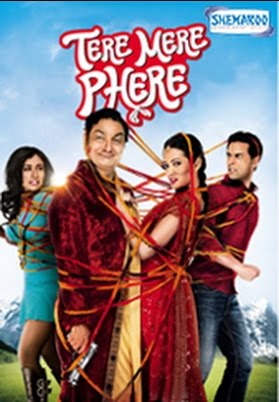
Movie Review: Tere Mere Phere (2011)

2 Stars (out of 4)

Buy the DVD at Amazon
Buy the soundtrack at Amazon

I don’t buy the premise that all married couples must fight. And when they do, I assume it’s usually over important stuff like money or child-rearing. Tere Mere Phere assumes that, not only do all married couples fight, but that even the pettiest of arguments can bring a couple to the brink of divorce. So much for the power of love.

Tere Mere Phere (“Our Wedding Vows”) begins several days into the unhappy honeymoon of Rahul (Jagrat Desai) and Pooja (Sasha Goradia). Flying home from their prematurely aborted road trip, they cause such a ruckus that their flight is forced to return to its departure airport.

Seeing Rahul and Pooja climbing in to their honeymoon camper van, fellow passenger Jai (Vinay Pathak) pulls a gun on them, demanding to be driven to the plane’s original destination. He has to make it to Shimla before his fiancée’s disapproving family can marry her to someone else. A few hours with incessantly bickering Rahul and Pooja convince Jai that marriage might not be worth it after all.

By introducing Rahul and Pooja at their most annoying, writer-director Deepa Sahi denies the audience the opportunity to relate to the couple. Rather than listening to them argue and thinking, “I’ve been there,” one looks at them and thinks, “Good grief, I’ve never been that obnoxious.”

There’s also something off about Sahi’s sense of what is funny. Not only are Rahul and Pooja unbearably irritating, but they don’t react appropriately to perceived slights. They blow up at each other over sitcom gender-role clichés — he’s messy; she’s too strict — but it’s played to comic effect when Rahul flirts with another woman to deliberately anger and humiliate Pooja.

It would be one thing if the bickering over inconsequential things were symptomatic of deeper problems, but flashbacks show the couple’s relatively smooth courtship. They’re actually cute as they joyously celebrate their perfect score on a magazine compatibility test. Sahi needed to show a lot more sweetness and a lot less combativeness between Rahul and Pooja to make them into a couple who deserve a happy ending.

Debutants Desai and Goradia don’t do their awkwardly-written characters any favors. Both actors seem to have studied at the School of Inappropriate Facial Expressions. When Rahul’s face is shown in a close-up, supposedly staring lovingly at Pooja, Desai’s intense grimace makes him look more like he’s planning to kill her.

Tere Mere Phere gets better performances from its more experienced actors. Vinay Pathak’s calm presence as Jai offsets Rahul & Pooja’s shrieking hysteria. Sushmita Mukeherjee is funny as Rahul’s overbearing mother, Seema.

But the real star of the film is the scenery. Shot in Himachal, Sahi wisely includes lots of shots of the region’s gorgeous mountains and rivers. For all their faults, at least Rahul and Pooja picked a nice place to honeymoon.

Links

Movie Review: Rascals (2011)

Zero Stars (out of 4)

Buy the DVD at Amazon
Buy the soundtrack at Amazon

Director David Dhawan is responsible for my worst Bollywood movie of 2009: Do Knot Disturb. Dhawan looks on track to reclaim the title this year with Rascals, a movie that exemplifies filmmaking at its laziest.

Let me start with a small example of the laziness that permeates Rascals. Early in the film, a tough guy named Anthony (Arjun Rampal) walks into a bar to watch a soccer game, and he places a bet on Brazil. Cut to the TV for a shot of the game, and it’s a game between Germany and Argentina.

A mistake like that wouldn’t have been a big deal if the movie was otherwise competently made. But here’s what it tells me about Dhawan’s level of respect for the audience: he has none. He thinks that moviegoers will be happy to spend two hours watching Ajay Devgn and Sanjay Dutt slap each other while Kangana Ranaut struts around in a bikini.

The problems stem from the crap story at the heart of Rascals. The plot is essentially a dumbed-down version of Bluffmaster!, but without a moral compass. Devgan and Dutt play Bhagat and Chetan (respectively), a pair of thieves who each independently steal from Anthony on the same day. Both flee to Bangkok, where they become rivals for the affections of Khushi (Ranaut).

Bhagat and Chetan spend the bulk of the film trying to thwart each other’s advances on clueless Khushi. Anthony doesn’t reenter the story until the last twenty minutes or so.

Rascals feels much longer than its two-hour runtime. Scenes are introduced without any set-up, and frequently without narrative purpose. Despite having two action stars as its leads, there are few action scenes, but lots of boring conversations between characters. Ranaut’s shrill delivery makes these scenes almost unbearable.

It’s not entirely Ranaut’s fault that her character so irritating. Khushi isn’t written to have any sort of depth or personality: she’s a dumb sex object, as is the only other major female character in Rascals, an escort named Dolly (Lisa Haydon).

A reliance upon stereotypes is another example of creative laziness in Rascals. Women are stupid and only good for sex; white women are particularly slutty (as evidence by the suspiciously high number of scantily clad, blonde backup dancers in Thailand); men are sex-crazed.

Not wanting to let an opportunity for casual racism slip by, Dhawan includes a scene in which Bhagat and Chetan are caught up in a bank robbery. The robbers are all black Africans. In Thailand.

I won’t go so far as to say that Dhawan is racist or sexist (though I can’t figure out why he thought it was cool to have Anthony vent his anger toward Bhagat and Chetan by slapping his innocent sister in the face). I just think he’s careless. Careless about the messages his movies send, not to mention careless about details.

Details like having the characters in Rascals celebrate Christmas just days after they celebrated Valentine’s Day.

Links

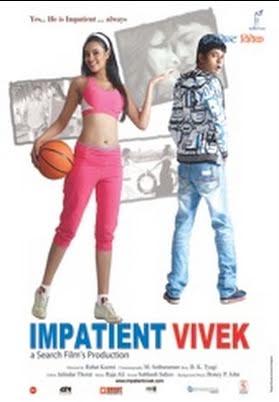
Movie Review: Impatient Vivek (2011)

Zero Stars (out of 4)

Buy the DVD at Amazon
Buy the soundtrack at Amazon

I’ve wracked my brain for something nice to say about Impatient Vivek. The best I’ve got is that writer-director Rahat Kazmi must be a talented pitchman, since he convinced someone to produce such a stupid movie. Impatient Vivek is so laughably bad that it nearly achieves so-bad-it’s-good status, thanks in large part to the most poorly translated English subtitles I’ve ever seen.

Impatient Vivek‘s problem stems from the fact that it has no plot, or at least not a plot in the traditional cinematic sense. It jumps right into the action without introducing the characters. Thus, it’s just confusing as the film begins with the titular Vivek (Vivek Sudershan) stealing money from his parents to take his nerd buddies on vacation to Goa, where they break into song.

What exactly is the audience supposed to feel at this point? All we know about the main character is that he’s a thief. Are we supposed to be happy for him?

Vivek falls for a girl named Shruti (Sayali Bhagat), who has no interest in him, likely because he attempts to woo her by communicating via a hand puppet. Two years pass, they meet again and she’s still not interested (probably because of his persistent interest in amateur puppetry).

In fact, Shruti’s engaged to some American guy. Her estranged older half-brother, Anu (Rannaoq Ahuja), returns to India from Canada to celebrate.

Suddenly, Anu becomes the focal point of the story. He tries to romance one of Shruti’s friends, and there’s a subplot involving Anu’s jealous half-brother. Shruti doesn’t reappear until Vivek kidnaps her on her wedding day, in yet another anti-heroic blunder.

When Shruti falls for Vivek — despite his being an immature criminal jackass — it just makes sense. It’s the natural conclusion to a movie in which a bunch of unlikeable characters behave in ways contrary to the ways real people behave.

The story isn’t the only problem in Impatient Vivek. The acting is uniformly terrible; the feeble attempts by the lead actors to muster tears are hilarious. Dance numbers are lame, sets look cheap and the editing is awkward.

But the highlights of Impatient Vivek are its nonsensical subtitles. The dialogue transcriber is clearly not fluent in English — and maybe not Hindi, either — as is evidenced by innumerable grammatical errors, misspellings and a general failure to convey meaning. For example:

“Anu become hero here to came from foreign.”

Huh? Given the amount of translation needed from broken English into actual English, I might’ve had an easier time figuring out what was being said if I’d ignored the subtitles and just used my own Hindi-English dictionary, instead.

Links

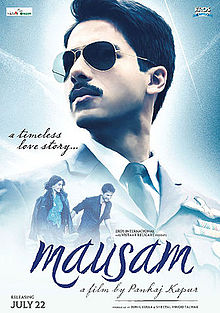
Movie Review: Mausam (2011)

1 Star (out of 4)

Buy the DVD at Amazon
Buy the soundtrack at Amazon

In the film industry, a “logline” is a single sentence that summarizes a movie’s plot. It’s an effective way to pique an audience’s interest or pitch a story to investors. Take Die Hard, for example: A cop’s attempt to reconcile with his ex-wife is derailed when her office building is taken over by terrorists.

Loglines aren’t unique to Hollywood; many great Indian movies can be succinctly summarized as well. Chak De India: The Indian Women’s Field Hockey team must overcome their own internal struggles before they can take on the rest of the world.

I’ve tried to craft a logline for Mausam, and I can’t do it. I don’t know what Mausam is about. Okay, I obviously know that it’s about two young people whose fondness for each other spans decades. So what?

In my example loglines for Die Hard and Chak De India, the conflicts that fuel the plots of both films are contained within the sentences. John McClane is at odds with both his ex-wife and the terrorists. The women’s hockey team fights internal and external battles.

Mausam‘s biggest problem is that it has no conflict. There’s no reason why the lead characters, Harry (Shahid Kapoor) and Aayat (Sonam Kapoor), can’t be together. Their parents don’t object, they’re not engaged to other people, they’re not driven apart by war or culture. Rather, their budding romance is stymied by minor obstacles and a lack of communication.

Harry and Aayat begin falling for one another in Harry’s village in Punjab, where Aayat has moved to escape violent riots in Kashmir. Then Aayat leaves in the middle of the night, without so much as leaving a note for Harry.

Seven years later (in 1999), Aayat and Harry meet again in Scotland. Actually, she spots him first but doesn’t say anything. She waits for him to notice her among all the women in Edinburgh, even though he has no reason to suspect she’d be there.

Her explanation for why she fled so suddenly years earlier? Her dad phoned and asked her to join him in Mumbai. No emergency, and she wasn’t in danger, she just moved house in the matter of a few hours on a moment’s notice.

The couple appear to be on their way to marriage when, this time, Harry is abruptly called away without time to contact Aayat.

Aayat’s excuse for not contacting Harry is difficult to believe, but Harry has no excuse at all. He has Aayat’s cell phone number, her home phone number and her home address. Rather than call Aayat to tell her why he had to leave, he phones his sister in Switzerland and tells her to go to Scotland (without calling first) and meet Aayat in person to explain what happened. Of course, Aayat has herself moved to parts unknown by then.

Harry and Aayat meet several times in subsequent years before they finally commit to a future together during a preposterous action-packed climax. The finale is so stupid, I laughed out loud.

What makes the silliness of actor Pankaj Kapur’s directorial debut such a shame is that Mausam is a great-looking movie. Harry’s hometown is a charming village out of time. There are a number of breathtaking set pieces, as when Harry races on his bicycle to catch Aayat’s departing train. Closeups of Sonam Kapoor — who’s plenty cute on her own — make her look angelic.

Kapur might yet have great success as a director, so long as someone else writes the screenplay.

Another problem that will only affect international audiences is that Mausam‘s English subtitles are translated too literally, something that doesn’t work given the different sentence structures of Hindi and English. Consequently, the jokes aren’t funny, and one must spend so much mental energy reconstructing the words into meaningful sentences that it distracts from the action on screen.

Overall, Mausam proves that style doesn’t trump substance. As gorgeous as it looks, Mausam is too boring and silly to warrant the nearly three hours of attention it requires.

Links